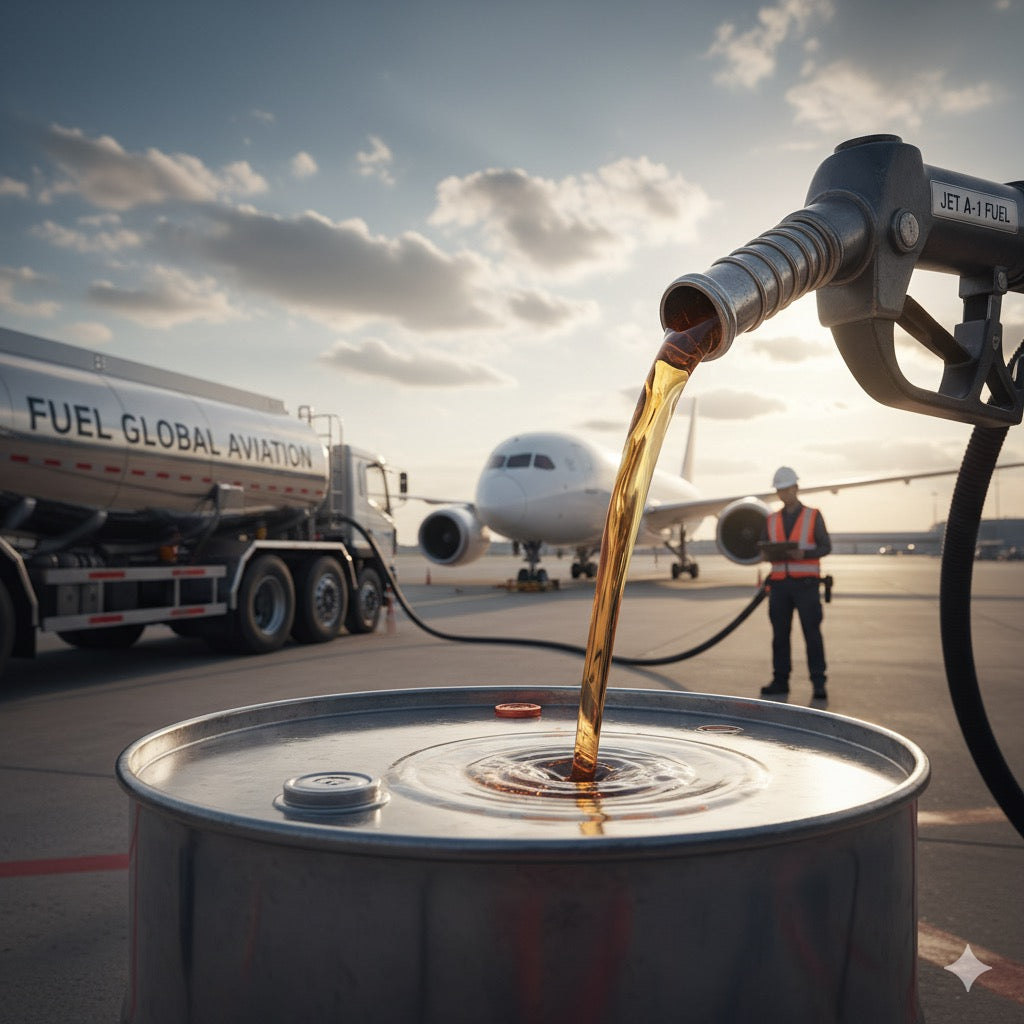
JET FUEL A1
JET FUEL A1
Jet A1 | Aviation Jet Fuel
Jet A-1 is the standard, globally used kerosene-grade aviation fuel that powers the vast majority of commercial and international aircraft. It is a highly refined petroleum product designed to meet stringent international standards for safety and performance.
Here is a breakdown of its key characteristics and usage:
PRIMARY USAGE
• Engine Type: Jet A-1 is designed specifically for aircraft powered by gas-turbine engines, which include jet engines, turboprops, and some turbine-powered helicopters.
• Civil Aviation: It is the backbone of commercial and international air travel, being the most commonly available jet fuel outside of the United States (where Jet A is also widely used).
• Military Equivalent: Its military equivalent is often designated as JP-8.
JET FUEL REFINING
• Process: Jet A-1 is produced from crude oil primarily through distillation, which separates the oil into different fractions based on boiling point.
• Key Steps: The relevant fraction (kerosene) is then treated (hydro treated) to remove impurities like sulphur.
• Goal: The final fuel is carefully blended to meet strict requirements, especially a low freezing point (max -47°C (-53°F)) for high-altitude flight and a safe flash point (min 38°C (100°F)).
KEY COMPOSITION AND PROPERTIES
Jet A-1 is a kerosene-type fuel, meaning it is a middle-distillate petroleum product that primarily consists of hydrocarbons with 9 to 16 carbon atoms.
| PROPERTY |
DESCRIPTION |
SIGNIFICANCE |
| Composition | Kerosene-type (complex mixture of hydrocarbons, mainly paraffins) | Provides high energy content for efficient combustion. |
| Appearence | Colorless to straw-colored | A visual indicator of its refined state. |
| Flash Point | Minimum 38°C (100°F) | The minimum temperature at which its vapors can ignite. A high flash point is a critical safety feature for storage and handling, reducing fire risk. |
| Freezing Point | Maximum -47°C (-53°F) | This low freezing point is crucial for high-altitude flight, where temperatures can drop well below freezing, preventing the fuel from solidifying and blocking fuel lines |
| Additives | Contains anti-static, anti-oxidant, and anti-microbial additives. | These additives enhance safety (static dissipaters) and maintain fuel quality and thermal stability over time. |
Product features
Product features
Materials and care
Materials and care
Merchandising tips
Merchandising tips